The AI nanny is here! In a new feat for science, robots and AI can now be paired to optimise the creation of human life. In a Matrix-esque reality, robotics and artificial intelligence can now help to develop babies with algorithms and artificial wombs.
Reported by South China Morning Post, Chinese scientists in Suzhou have developed the new technology. However, there are worries surrounding the ethics of actually artificially growing human babies.
Accelerating Research To Prevent & Cure Disease — Dr. Kevin Perrott, Ph.D., Founder & CEO, OpenCures; Co-Founder & Treasurer, SENS Research Foundation
Dr. Kevin Perrott, Ph.D. is Founder and CEO, OpenCures (https://opencures.org/), Adjunct Professor, University of Alberta, Co-Founder and Advisor, Oisin Biotechnologies, President, of Global Healthspan Policy Institute, and Co-Founder and Treasurer, SENS Research Foundation.
Kevin is a successful entrepreneur and owner of the largest motorcycle and snowmobile dealership in Canada, Riverside Honda and Skidoo Sales in Edmonton, Alberta. He became a cancer survivor, an experience which clearly highlighted the deficiencies of the current health technology development paradigm where the customer has almost no input in the development of their own health solutions. Armed with the realization that nothing is more valuable than health and the time to enjoy it with those you love, Kevin resolved to put his energies towards addressing these deficiencies.
In 2003, Kevin joined Aubrey de Grey and David Gobel to form the Methuselah Foundation which offered competitive prizes for advances in longevity science. A few years later he became a co-founder with Aubrey de Grey and others of SENS Research Foundation to develop interventions able to repair or make harmless the damage that accumulates and underlies multiple age-related disorders. Mostly recently, Kevin formed OpenCures as a for-benefit corporation helping individuals perform self-directed research, generate data, and focus the value of data on the health solutions they are interested in.
Kevin has authored and co-authored several peer-reviewed articles all focused on accelerating the science underlying the development of therapies for degenerative diseases. He is a co-founder of multiple non-profit and for-profit entities whose missions are aligned with that purpose.
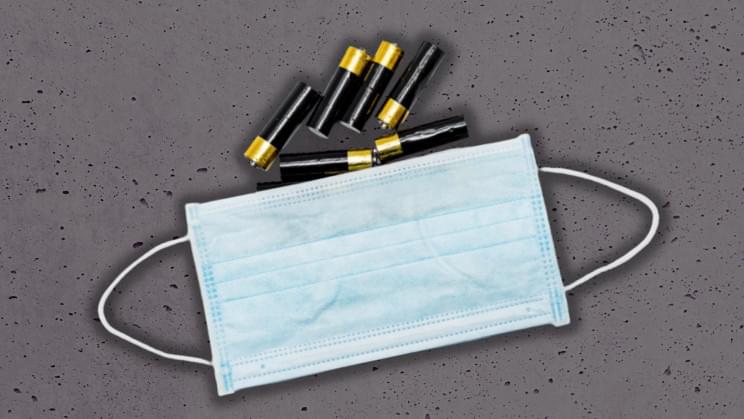
With the emergence of the COVID-19 pandemic, humans have become reliant on personal protection equipment, or PPE, more and more with each wave of infection. While single-use face masks make up a large portion of PPE around the world, not much thought has been given to the proper disposal of these products.
While these products are crucial in our fight against COVID-19, they undoubtedly take a toll on the environment, ending up in landfills and oceans, giving off toxic gases. In only 2020, 52 billion face masks were made and 1.56 billion of them ended up in our oceans. they’re low-cost and disposable.
What are biomarkers? They are medical signals that can measure health in an accurate and reproducible way. Common examples include blood pressure readings, heart rate, and even genetic test results.
Modern digital devices measure several health parameters. Fitbit trackers use sensors such as accelerometers to tell how many steps we’ve taken in a day or how fast we’ve been walking. When can such novel health measures function as medical biomarkers?
The measures must be objective, quantifiable, and reproducible. Additionally, scientific evidence needs to show that the health attribute measured by the device maps consistently and accurately to a clinical outcome. For example, voice signals from a smartphone’s microphone can detect mild cognitive impairment due to Alzheimer’s disease. World War II, commanders and troops communicated using hand-sent Morse codes. To avoid capture by enemies, telegraph operators had to remain anonymous. Any clues about operator identity or location could influence battle outcomes.
New research published in Human Brain Mapping provides evidence of a shared neural mechanism that underlies sleep disturbance and mental disorders in preadolescents. The findings indicate that sleep disturbance and mental health problems are both related to the connectivity between and within two important brain networks.
“I noticed the importance of sleep years ago when I read several papers about the immediate amyloid protein deposition in the brain after short-term sleep deprivation. Amyloid is neurotoxic waste in the brain and needs to be transported out by cerebrospinal fluid,” said study author Ze Wang, an associate professor of diagnostic radiology and nuclear medicine at the University of Maryland School of Medicine.
“But cerebrospinal fluid is basically static most of the time. The best time to have more cerebrospinal fluid and increased flow rate is at night when you lay down and fall asleep. It is this time that our cerebral blood flow reduces. Because our brain has a fixed size, the reduction of cerebral blood flow creates space for cerebrospinal fluid and the inhomogeneous change of blood flow creates power for cerebrospinal fluid to flow and then transport the neural waste out. This is why our brain generates two times as much cerebrospinal fluid at night than daytime.”
China has designated some cities and entities to trial blockchain applications, underscoring the importance Beijing is attaching to this particular technology.
In 2019, President Xi Jinping called on China to “seize the opportunities” presented by blockchain, giving his personal backing to the technology.
The Chinese capital Beijing and mega city Shanghai as well as Guangzhou in the south are all part of the pilot projects. Local government departments, universities, banks, hospitals, car companies and power firms are among the 164 entities chosen by China to carry out trial blockchain applications.
We might be amidst a chip shortage, but if you enjoy reverse-engineering, there’s never a shortage of intriguing old chips to dig into – and the 2513N 5×7 character ROM is one such chip. Amidst a long thread probing a few of these (Twitter, ThreadReader link), [TubeTime] has realized that two address lines were shorted inside of the package. A Twitter dopamine-fueled quest for truth has led them to try their hand at making the chip work anyway. Trying to clear the short with an external PSU led to a bond wire popping instead, as evidenced by the ESD diode connection disappearing.
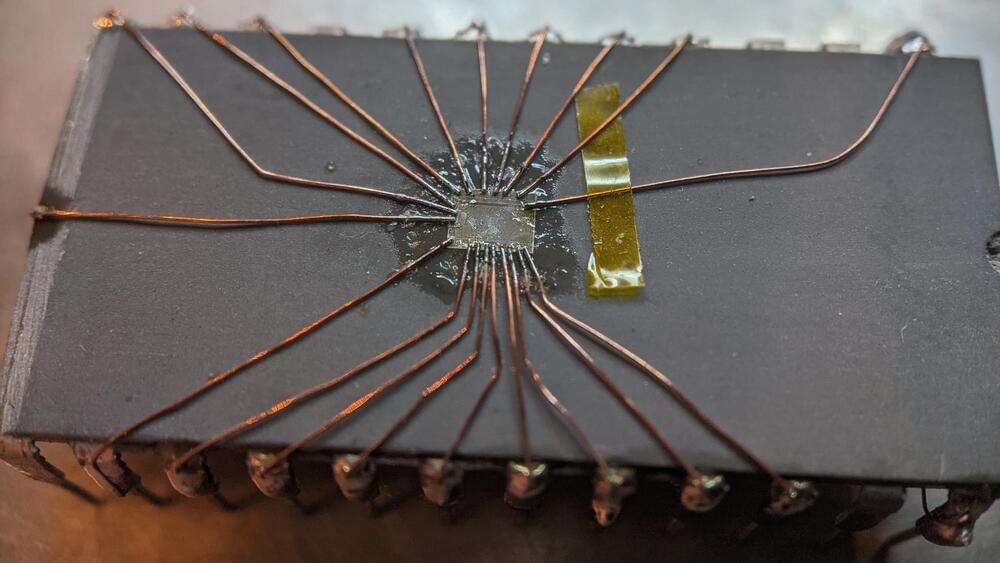
A dozen minutes of sandpaper work resulted in the bare die exposed, making quick work of the bond wires as a side effect. Apparently, having the bond pads a bit too close has resulted in a factory defect where two of the pads merged together. No wonder the PSU wouldn’t take that on! Some X-acto work later, the short was cleared. But without the bond wires, how would [TubeTime] connect to it? This is where the work pictured comes in. Soldering to the remains of the bond wires has proven to be fruitful, reviving the chip enough to continue investigating, even if, it appears, it was never functional to begin with. The thread continued on with comparing ROMs from a few different chips [TubeTime] had on hand and inferences on what could’ve happened that led to this IC going out in the wild.
Such soldering experiments are always fun to try and pull off! We rarely see soldering on such a small scale, as thankfully, it’s not always needed, but it’s a joy to witness when someone does IC or PCB microsurgery to fix factory defects that render our devices inoperable before they were even shipped. Each time that a fellow hacker dares to grind the IC epoxy layers down and save a game console or an unidentified complex board, the world gets a little brighter. And if you aren’t forced to do it for repair reasons, you can always try it in an attempt to build the smallest NES in existence!
A team of scientists at Tufts University and Harvard University “have brought us a step closer to the goal of regenerative medicine” by using a drug cocktail to regrow a frog’s amputated legs.
He’s backing a new biotech company working on “cellular rejuvenation programming.”
It sure looks like Jeff Bezos has plans to cheat death.
The founder and former CEO of Amazon has reportedly made an investment in the freshly launched Altos Labs, a biotech startup focused on “cellular rejuvenation programming to restore cell health and resilience, with the goal of reversing disease to transform medicine,” according to a January 19 press release. With $3 billion in backing on day one, Altos Labs has hit the ground running with what may be the single largest funding round for a biotech company, according to the Financial Times of London.
Altos Labs has an impressive roster of executives that includes experts formerly of GlaxoSmithKline, a health care company in the United Kingdom that primarily develops pharmaceuticals and vaccines; Genentech, a San Francisco-based biotech firm that created the first targeted antibody for cancer; and the National Cancer Institute. The quest to cheat death is as old as life itself, but this is an especially pedigreed bunch to take on the challenge.