To fuel the future advancement of the electronics industry, engineers will need to develop batteries that can be charged quickly, have higher energy densities (i.e., can store more energy) and last longer. Among the most promising alternatives to lithium-ion (Li-ion) batteries, which power most devices on the market today, are lithium-metal batteries (LMBs).
As suggested by their name, LMBs have an anode (i.e., negative electrode) made of Li metal. Compared to Li-ion batteries, which have graphite or silicon-based anodes, LMBs can exhibit significantly higher energy densities.
Despite their potential, LMBs have been found to exhibit slow redox kinetics and poor cycling reversibility. These limitations tend to adversely impact their performance, reducing their charging speed and their efficiency over time.
Aion from ballistic to diffusive motion within 10 ps is observed in supercritical carbon dioxide with X-ray photon correlation spectroscopy. Collisions of unbound molecules with clusters are responsible for the ultrafast momentum exchange.
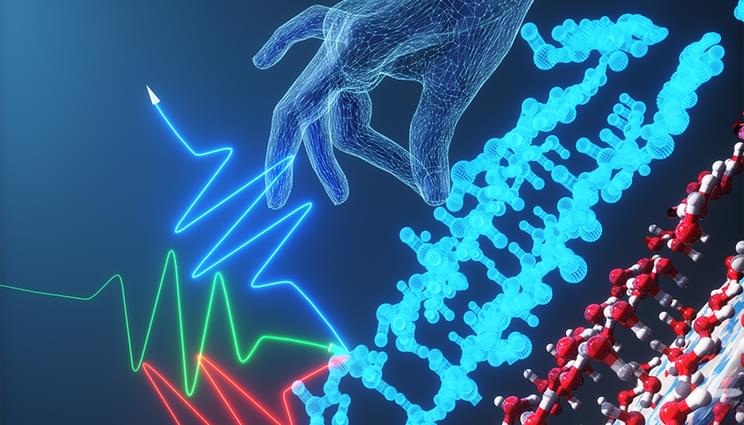
Much like a tongue freezes to a frigid metal pole, ice can cause speed up the adsorption, or stickiness, of molecules. An icy surface can also cause molecules to degrade in the presence of light, releasing trace gases. Before researchers can measure these reactions and incorporate their impacts in global atmospheric models, researchers first need to understand the structure of ice itself.
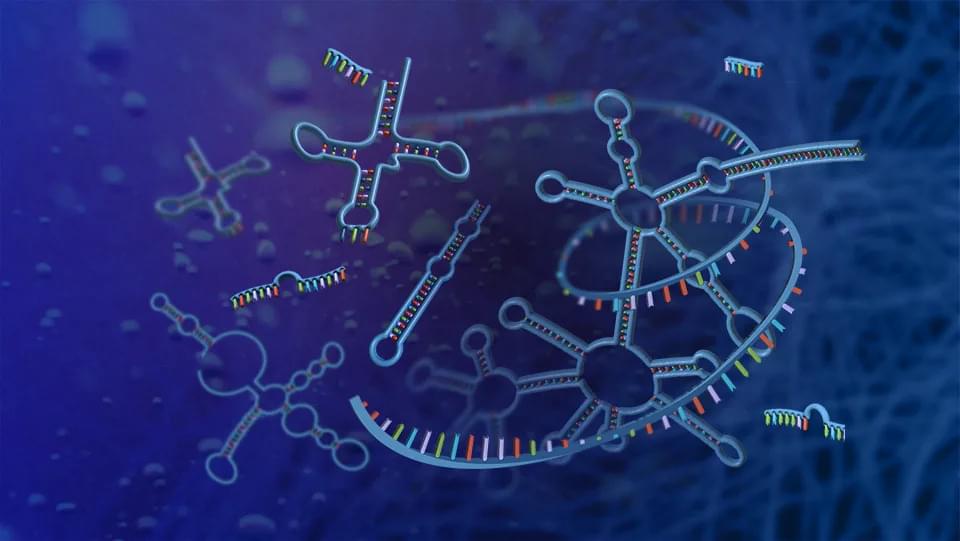
Transfer RNAs (called tRNAs for short) are small RNA molecules that play an important role in protein synthesis! Each tRNA corresponds to one of the 20 possible protein building blocks in humans called amino acids. As the ribosome reads each codon along an mRNA, the tRNA bring the correct amino acid, which is then added to the growing protein molecule!
Many types of RNA, including tRNAs, fold into specific shapes that help them function and keep them stable. Complementary sequences at different positions along the length of an RNA fold the molecule into loops and other complex structures.
TRNAs are folded into a distinct L-shape that helps them carry out their function. One end of the tRNA has a specific sequence to match a codon on the mRNA, while the other end of the tRNA has a site to carry the amino acid that will be added to the new protein.
Learn more in our RNA fact sheet!
Ribonucleic acid (RNA) is an essential molecule that performs many roles in the cell, from carrying the instructions to make proteins to regulating genes.
Credits: Dan V. Nicolau, Mercy Lard, Till Korten, Falco C. M. J. M. van Delft, Malin Persson, Elina Bengtsson, Alf Månsson, Stefan Diez, Heiner Linke, and Dan V. Nicolau.
PNAS. 2016. DOI: 10.1073/pnas.
Animation explaining the computation principle. In this animation, a network encoding the {1,3} SSP is explained and an example agent is shown to travel the path that encodes the subset {3}. The agent enters the network from the top left-hand corner. It first encounters a split junction where it randomly decides to turn right and exclude the corresponding number. The agent then enters another split junction, where it adds the corresponding number to the subset. The number of pass junctions following each split junction determines the actual value of the integer added to the subset at the respective split junction. The exit numbers correspond to the target sums T (potential solutions) represented by each exit. The example agent arrives at the exit #3 corresponding to the total sum of the subset {3} the agent explored. Finally, the correct results (labeled in green) and incorrect results (where no agents will arrive; labeled in magenta) for this particular set {1, 3} are explained.
Acknowledgment: Dissemination of the results of ABACUS Project, funded by the European Union’s Seventh Framework Programme for Research, Technological Development and Demonstration under Grant Agreement no. 613,044 The beneficiaries and partners in ABACUS Consortium are: Lund University, Coordinator, Molecular Sense Ltd. — UK, Linnaeus University – Sweden, Dresden University – Germany and McGill University, Canada. The main result of the Project has been published in the Proceedings of the National Academy of Sciences of the USA — 113, 2591–2596 (2016). Authors: Dan V. Nicolau Jr., Mercy Lard, Till Korten, Falco C. M. J. M. van Delft, Malin Persson, Elina Bengtsson, Alf Månsson, Stefan Diez, Heiner Linke, and Dan V. Nicolau For more information on the ABACUS Project you may visit http://abacus4eu.com/
Well this is like the wizard of odd. 🙄 An expedition to a deep-sea ridge, just north of the Hawaiian Islands, revealed a surprise discovery back in 2022: an ancient dried-out lake bed paved with what looks like a yellow brick road.
The eerie scene was chanced upon by the exploration vessel Nautilus, while surveying the Liliʻuokalani ridge within Papahānaumokuākea Marine National Monument (PMNM).