Toggle light / dark theme

Quantum sensors: How does the flow profile affect flow measurements?

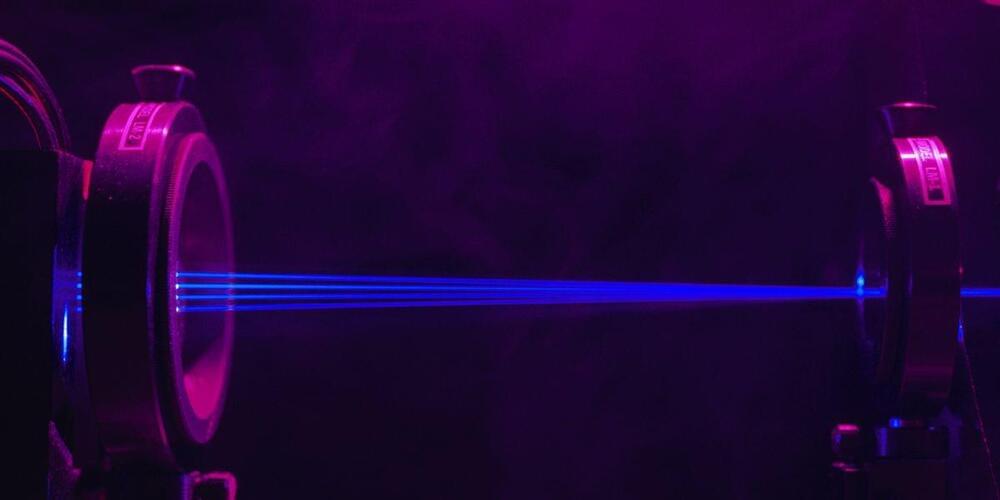
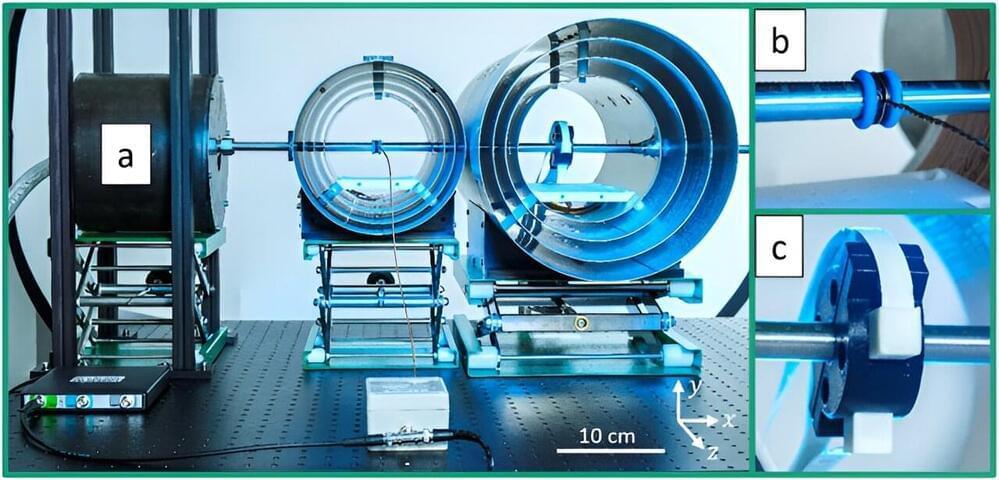
Researchers at Fraunhofer IPM have developed a contactless flow measurement method based on magnetic fields. For the first time, they have been able to show the quantitative impact of the flow profile on the magnetic signal. This opens up new possibilities for improving the measurement method.

The results were recently published in the Journal of Applied Physics.

There are many manufacturing processes across various industries where flowing liquids play a key role. Controlling or automating such processes requires reliable data on the rate of the liquids. The -based flow measurement technique developed at Fraunhofer IPM provides accurate flow data without any contact with the liquid.

Stanley Jordan Plays the Periodical Table (Ionization Energies)

The ionization energy is the amount of energy required to remove a single electron from an atom. If the atom has more than one electron, each one requires more energy than the previous one. The result is a series of increasing energy levels, and in the quantum world these energies correspond to frequencies, as in a musical scale.

This raises an interesting question: if we could hear these frequencies how would they sound? I created an app to find out, and in this video I used my app to share what I learned. As it turns out, the results are quite musical.

Important note: This audio includes some very low frequencies, which you might not hear through typical cell phone or laptop speakers. I recommend listening with headphones or a high-quality playback system.

The app was created using the APL programming language.
This video was uploaded in 2021, and changed from unlisted to listed in July 2024.

Sound Science: How Phononic Crystals are Shaping Quantum Computing

Researchers have developed a genetic algorithm for designing phononic crystal nanostructures, significantly advancing quantum computing and communications.

The new method, validated through experiments, allows precise control of acoustic wave propagation, promising improvements in devices like smartphones and quantum computers.

Quantum Computing Revolution

Wormholes and quantum entanglement | Juan Maldacena

[2023 APCTP Spring Colloquium] Wormholes and quantum entanglement.

Date: 10 March, 2023
Speaker: Prof. Juan Maldacena.

We describe various types of wormholes in general relativity. We willmention which wormholes are allowed and which ones are forbidden, bothclassically and quantum mechanically. We will describe the connectionbetween wormholes and entanglement, in the particular case of entangledblack holes.

A 2D Device May Help Quantum Computers Stay Cool

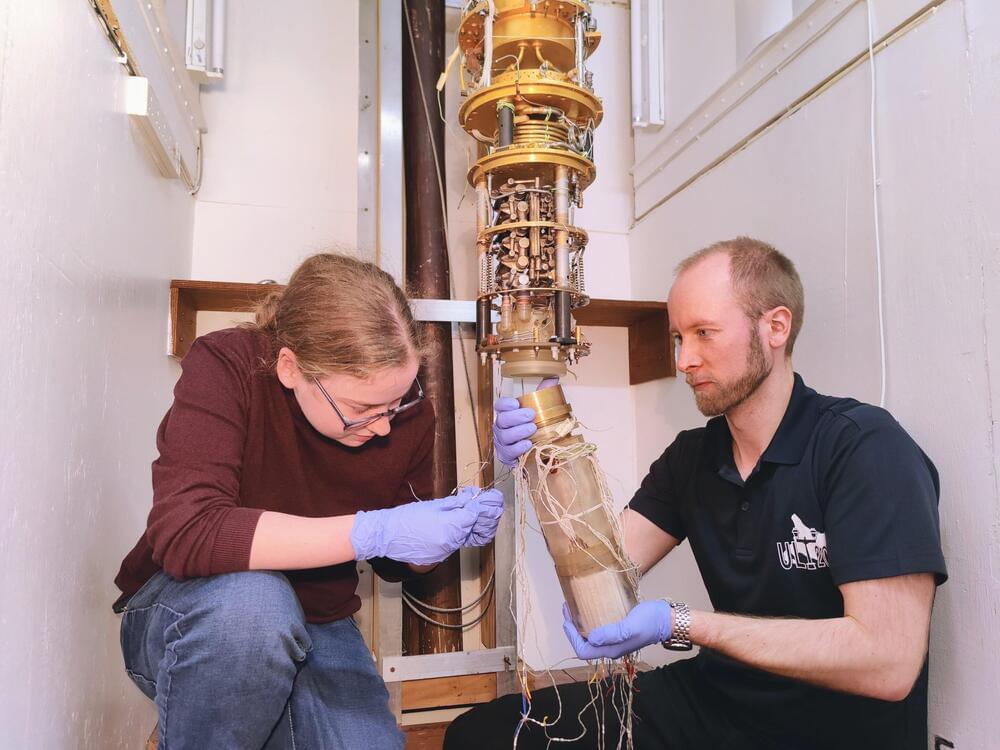
PRESS RELEASE — To perform quantum computations, quantum bits (qubits) must be cooled down to temperatures in the millikelvin range (close to-273 Celsius), to slow down atomic motion and minimize noise. However, the electronics used to manage these quantum circuits generate heat, which is difficult to remove at such low temperatures. Most current technologies must therefore separate quantum circuits from their electronic components, causing noise and inefficiencies that hinder the realization of larger quantum systems beyond the lab.

Researchers in EPFL’s Laboratory of Nanoscale Electronics and Structures (LANES), led by Andras Kis, in the School of Engineering have now fabricated a device that not only operates at extremely low temperatures, but does so with efficiency comparable to current technologies at room temperature.

AI could prove that reality doesn’t exist, physicists say

Learn science in the easiest and most engaging way possible with Brilliant! First 30 days are free and 20% off the annual premium subscription when you use our link ➜ https://brilliant.org/sabine.

A group of physicists wants to use artificial intelligence to prove that reality doesn’t exist. They want to do this by running an artificial general intelligence as an observer on a quantum computer. I wish this was a joke. But I’m afraid it’s not.

Paper here: https://quantum-journal.org/papers/q–

🤓 Check out my new quiz app ➜ http://quizwithit.com/
💌 Support me on Donorbox ➜ https://donorbox.org/swtg.
📝 Transcripts and written news on Substack ➜ https://sciencewtg.substack.com/
👉 Transcript with links to references on Patreon ➜ / sabine.
📩 Free weekly science newsletter ➜ https://sabinehossenfelder.com/newsle
👂 Audio only podcast ➜ https://open.spotify.com/show/0MkNfXl
🔗 Join this channel to get access to perks ➜
/ @sabinehossenfelder.
🖼️ On instagram ➜ / sciencewtg.

#science #sciencenews #artificialintelligence #physics

Searching for dark matter with the coldest quantum detectors in the world

One of the greatest mysteries of science could be one step closer to being solved. Approximately 80% of the matter in the universe is dark, meaning that it cannot be seen. In fact, dark matter is passing through us constantly—possibly at a rate of trillions of particles per second.

We know it exists because we can see the effects of its gravity, but experiments to date have so far failed to detect it.

Taking advantage of the most advanced quantum technologies, scientists from Lancaster University, the University of Oxford, and Royal Holloway, University of London are building the most sensitive dark matter detectors to date.

Quick-Cooling Oddballs Rewrite Neutron Star Physics

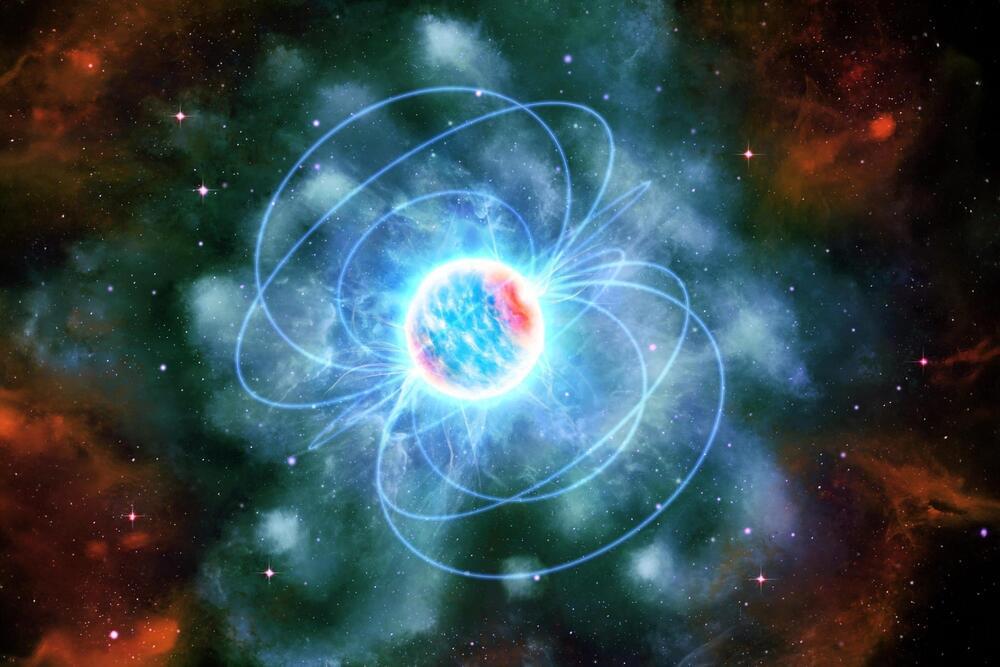
Recent observations by ESA’s XMM-Newton and NASA ’s Chandra have revealed three unusually cold, young neutron stars, challenging current models by showing they cool much faster than expected.

This finding has significant implications, suggesting that only a few of the many proposed neutron star models are viable, and pointing to a potential breakthrough in linking the theories of general relativity and quantum mechanics through astrophysical observations.

Discovery of unusually cold neutron stars.

‘Acceleration beats’ shine bright light on a novel universal modulation regime in a semiconductor-based laser

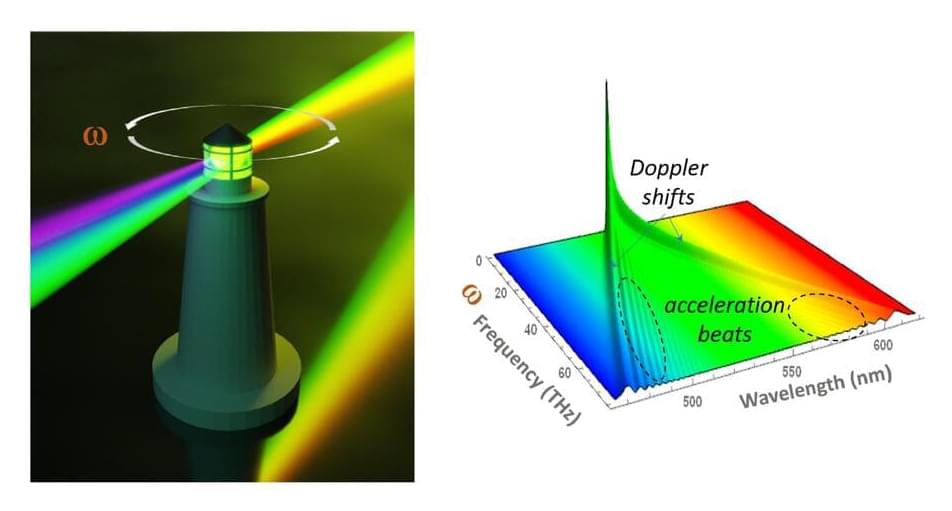
Researchers at the Paul-Drude-Institute for Solid State Electronics (PDI) have observed a novel modulation regime characterized by the emergence of previously unseen “acceleration beats” in a modulated semiconductor-based laser.

As they detail in a paper published today in Nature Communications, the key—and somewhat counterintuitive—feature of this novel regime is the ability to coherently manipulate using modulation periods longer than the coherence time, provided that the modulation amplitude is large enough.

Harmonic modulation of light sources, such as lasers, is the cornerstone of many modern and emergent telecommunications technologies. In this regard, two regimes of modulation are well-known: the adiabatic regime and the non-adiabatic regime.

/* */