Toggle light / dark theme

Watch the world’s first hydrofoiling ground effect vehicle take off

Regent has released video of its remarkable Seaglider prototype in flight testing. The first machine to combine the efficiency advantages of ground effect and hydrofoiling in a single design, it promises revolutionary speed and range in coastal areas.

Wing-in-ground effect (WIG) aircraft such as the Soviet-era Ekranoplan have shown promise in the past, but they’re yet to take off, so to speak, as a mainstream form of transport. These low-flying birds ride on a cushion of air between their wings and the surface, which gives them a significant lift and efficiency boost over regular planes flying higher in the air – as long as they stay within their own wingspan of the surface beneath. This extreme altitude restriction means that while ground-effect aircraft could fly over land, it’s too dangerous for regular operations, and they typically stay over water.

The numbers haven’t been attractive enough to date, but the era of electrification brings a set of new incentives to the game. Electric boats are struggling to prove their worth; batteries simply don’t hold enough energy to push through the tough medium of water for long distances. Early electric aircraft struggle to deliver useful range with a decent number of passengers on board, too. Regent looked at this, and saw a situation where the efficiency of the old ground-effect vehicle could give it a genuine commercial advantage, if paired with another, more recent technology.
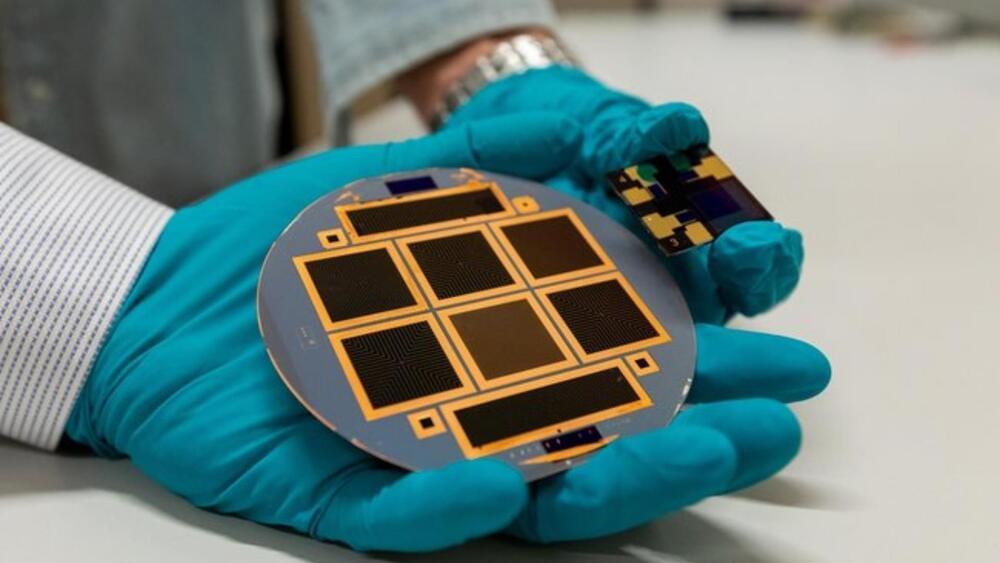

Netherlands researchers break the 30 percent barrier in solar cells

Four terminal perovskite-silicon photovoltaic designs helped them in their cause.

A collaboration of researchers from various institutes in the Netherlands broke the 30 percent barrier associated with solar cells. The achievement will help uptakeworldwide solar energy and reduce our dependence on fossil fuels, an organizational press release said.

Even as governments across the world are promoting solar energy in their bid to reduce carbon emissions, the adoption of the technology has been limited by its energy conversion efficiency. Most commercially available solar panels top out at 22 percent energy conversion efficiency.

If this could be improved, it would mean that more power can be generated in the same patch of land at a lower cost per unit, increasing energy availability while reducing the end cost to customers, making it a win-win proposition.

Our solar power dreams are threatened by shadows, we shouldn’t ignore them for long

Save your solar panels from the shade.

Currently, solar power accounts for 3.3 percent of the total energy produced in the US, and it has become the fastest-growing source of clean energy in the country. The National Renewable Energy Laboratory estimates that by 2050, the share of solar energy in America’s total electricity production could reach 45 percent. However, in order to achieve this milestone, solar energy experts will have to make photovoltaic systems more efficient and advanced than ever.


Scientists analyze the role of shadows in decreasing the power output of solar panels for small solar systems. This could tell us how shade from objects ranging from clouds to dust affects the amount of electricity produced by a solar panel.

Meet Sky Whale: A 3-story aircraft concept that can seat 755 passengers

The AWWA Sky Whale concept represents luxurious and greener aviation.

AWWA Sky Whale, a large, intriguing-looking flying machine, is meant to represent the pinnacle of luxury, performance, and sustainability.

At a recent exhibition on future transportation hosted at Kuwait’s Sheikh Abdullah Al Salem Cultural Center, the design of Oscar Vinals was on display.

The Sky Whale concept focuses on the “green” aircraft designs of the future for the ordinary airliner planes of the twenty-first century, which might profit from technological solutions that are more eco-friendly, most efficient, and offer maximum performance.

Magnetic field helps thick battery electrodes tackle electric vehicle challenges

As electric vehicles grow in popularity, the spotlight shines more brightly on some of their remaining major issues. Researchers at The University of Texas at Austin are tackling two of the bigger challenges facing electric vehicles: limited range and slow recharging.

The researchers fabricated a new type of electrode for that could unleash greater power and faster charging. They did this by creating thicker electrodes—the positively and negatively charged parts of the battery that deliver power to a device—using magnets to create a unique alignment that sidesteps common problems associated with sizing up these critical components.

The result is an electrode that could potentially facilitate twice the range on a single charge for an electric vehicle, compared with a battery using an existing commercial electrode.

Watch world’s first flying electric boat concept complete its test flight

Regent’s electric seaglider successfully completed its first series of flights and demonstrated her ability to fully fulfill its “float-foil-fly” mission.

A video of Regent’s unique Seaglider prototype in flight testing has just been released. The machine offers breakthrough speed and range in coastal locations as the first to combine the efficiency benefits of ground effect with hydro-foiling in a single design.


Assets.

Although wing-in-ground effect (WIG) aircraft like the Soviet-era Ekranoplan had previously shown promise, they haven’t quite taken off as a standard mode of transportation. As long as they keep within their wingspan of the surface below, the air cushion between the wings and the surface gives these low-flying birds a significant lift and efficiency gain over ordinary planes flying higher in the air.

China’s XPeng revealed the world’s fastest charging electric vehicle: 160 mph in 5 mins

The electric vehicle also offers the first full-scenario driver assistance.

In an attempt to tackle range anxiety, Chinese automaker XPeng has revealed the fastest charging electric vehicle, G9, which also features industry-first full-scenario driver assistance.

The G9 model from XPeng features a brand-new powertrain system built on China’s first 800 V Silicon Carbide (SiC) mass production platform. The 4C version of the G9 can add up to 160 miles (200 km) of CLTC range in as little as five minutes, thanks to the company’s new 480 kW S4 supercharging stations, which means it can charge from 10–80 percent in just 15 minutes.

Volkswagen’s new partnership will develop vehicle-to-grid energy storage

Volkswagen’s charging unit Elli and re.alto, a startup owned by Brussels-based Elia, signed a memorandum of understanding on Friday to collaborate on ways to integrate EVs into the electricity system in order to fight global warming.

A route to abating climate change

“The wide-spread adoption of EVs will be one of society’s fastest and most effective routes to abating climate change in the coming decade. Additionally, EV batteries will be able to contribute to keeping the grid in balance as the share of renewables in the energy mix increases. This can only occur if consumers are encouraged to valorize their flexibility, aligning their charging behavior with the availability of affordable green energy,” said the statement.

Is Space Force moving fast enough for its Rapid Capabilities Office?

“I need to have the processes in place for rapid fielding and acceptance of these things, and that’s not getting a lot of traction right now,” Space RCO Director Kelly Hammett said Sept. 12 at the Air, Space and Cyber Conference in National Harbor, Md.

The Space RCO aims to develop the first few units of a defense system and then hand them off to Space Systems Command, the Space Force’s acquisition arm, to manage production. Hammett said his team is on track to deliver 10–12 projects over the next three years.

Because most of its programs are classified, the office has not revealed details on the technology and scope of its first deliveries. According to fiscal 2023 budget documents, the Space RCO is supporting an Air Force Research Laboratory effort to use solar energy to provide “logistically agile power” to forces on the ground. Its unclassified budget request included $36 million for that effort and about $9 million to support space capability studies.

/* */